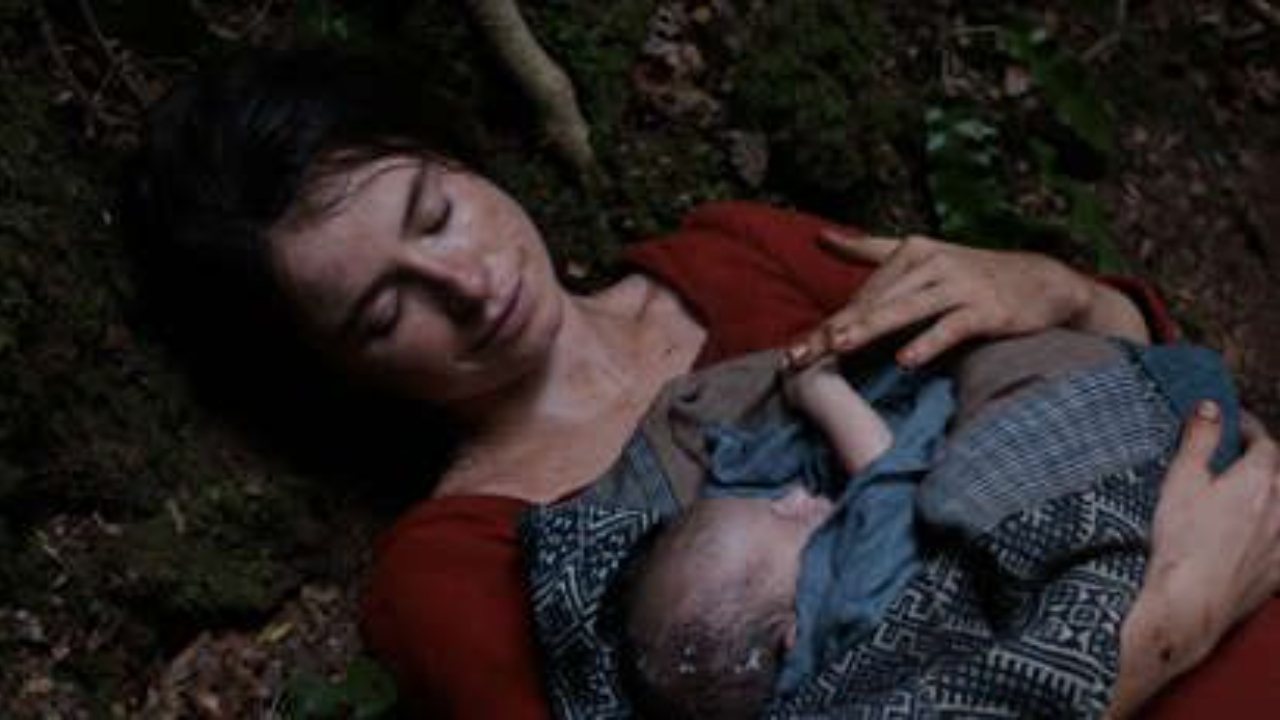
A meditative practice focused on being present with ambient grief and moments of uncertainty.
Drawing inspiration from Pema Chödrön's teachings and the movie 'Hamnet,' the practice encourages accepting and experiencing these moments fully without retreating.
A Meditation for Grief When There Is No Resolution
Grief doesn’t always arrive with a clear beginning or a clean ending. Many of us are swimming in ambiguous loss and the daily global horrors that never seem to let up.
As a highly sensitive person, I absorb this more than most. So do my students. This kind of ongoing grief often shows up as chronic stress, inflammation, joint pain, brain fog, low energy, and attention drift.
Emotionally, it can feel like swinging between irritability and tenderness, despair and creativity, numbness and deep empathy — sometimes all in the same afternoon.
This is where a meditation for grief can be supportive — not to fix anything, but to help us stay present without collapsing or shutting down.
Begin by Checking In With Your Body
If you’re ready to practice this meditation, I invite you to start by checking in with your body.
Find a position that offers some ease.
If there’s fidgeting, allow the fidgeting. This belongs. Nothing needs to be corrected. If you notice conflicted or even opposite feelings — agitation and tenderness, grief and love — see if you can hold them together. That inner itchy sensation may feel like a lack of confidence in how to move forward.
Sometimes that’s because moving forward isn’t what’s required of us right now.
Sometimes what’s needed is to simply be here, despite our confusion.
Despite feeling lost.
Despite uncertainty.
Staying With Uncertainty
I often return to Pema Chödrön’s words in When Things Fall Apart. She reminds us that our struggle is there to help us grow.
"it just keeps returning with new names, forms, and manifestations. Until we learn whatever it has to teach us about where we are separating ourselves from reality. How we're pulling back instead of opening up. Closing down, instead of allowing ourselves to experience fully whatever we encounter. Without hesitating or retreating into ourselves."
-Pema Chödrön
This question feels universal to me:
Who are we in times of uncertainty and grief?
When things are unforeseen, when there’s loss or liminal space, what becomes most important?
What if it’s okay to be unsure — within ourselves, within those we love, and within our wider community?
Breath as Grounding, Not Escape
Bring one hand to your heart and take a deep breath in. Sigh it out. Keep going.
We’re not trying to release grief. We’re simply releasing some carbon dioxide, allowing the nervous system to settle enough to stay present.
At the end of your sigh, draw your waist gently toward your spine and let the breath fully empty. Notice when the next inhale wants to happen on its own.
If it feels supportive, chant softly or silently: AUM.
Feel the breath expand you. Notice the release. Then a gentle gathering inward, returning to your center.
Expand.
Pause.
Release.
Gather.
Pause.
Continue at your own pace.
Imagining Held Safety
With all of your senses, place yourself somewhere you feel held and protected. This could be a place in nature, a cherished memory, or an imagined space.

I recently watched Hamnet, and it spoke deeply to the universality of grief.
The opening scene pans down a vast, 1,000 year old tree, onto a woman resting at its base.
I imagine myself curled at the base of that ancient tree, nestled between its roots.
Cradled by moss.
Grounded in the earth.
Close to decay, loss, and darkness — while above me, a hawk circles as a protective presence.
Sun warms my cheeks. My heart stays open.
I walk out of the forest accompanied by the hawk, bringing the forest with me. Walking toward uncertainty. Being embraced even while feeling loss.
You don’t need to use my imagery.
Find your own.
Let it support you.
Keeping the Channel Open
Bring one hand to your heart and one to your belly. Let a finger from each hand touch, creating a channel from gut to heart.
It’s a short distance anatomically, but it can feel like a very long journey.
Breathe.
This is often where grief lives — below language. We don’t need to make sense of it to stay connected.
Being With What Is
This meditation for grief isn’t about closure. It’s about companionship.
If you’re here, listening, breathing, and staying — that’s enough.
AUM. Shanti shanti shanti. AUM.
If this practice resonated, it offers a small taste of how we work inside The Compassion Club — a soft landing where highly sensitive people can breathe, move, and be with what is, together.
If you breathe, you belong here.
Stop Walking On Eggshells!
Gentle yoga to release your stress and shift your mindset about struggle.
If you get your buttons pushed often by other people's issues, you may be hypervigilant. You might feel it in your body as clenching, tension, or chronic pain.
You'll become more grounded in awareness of your body.